

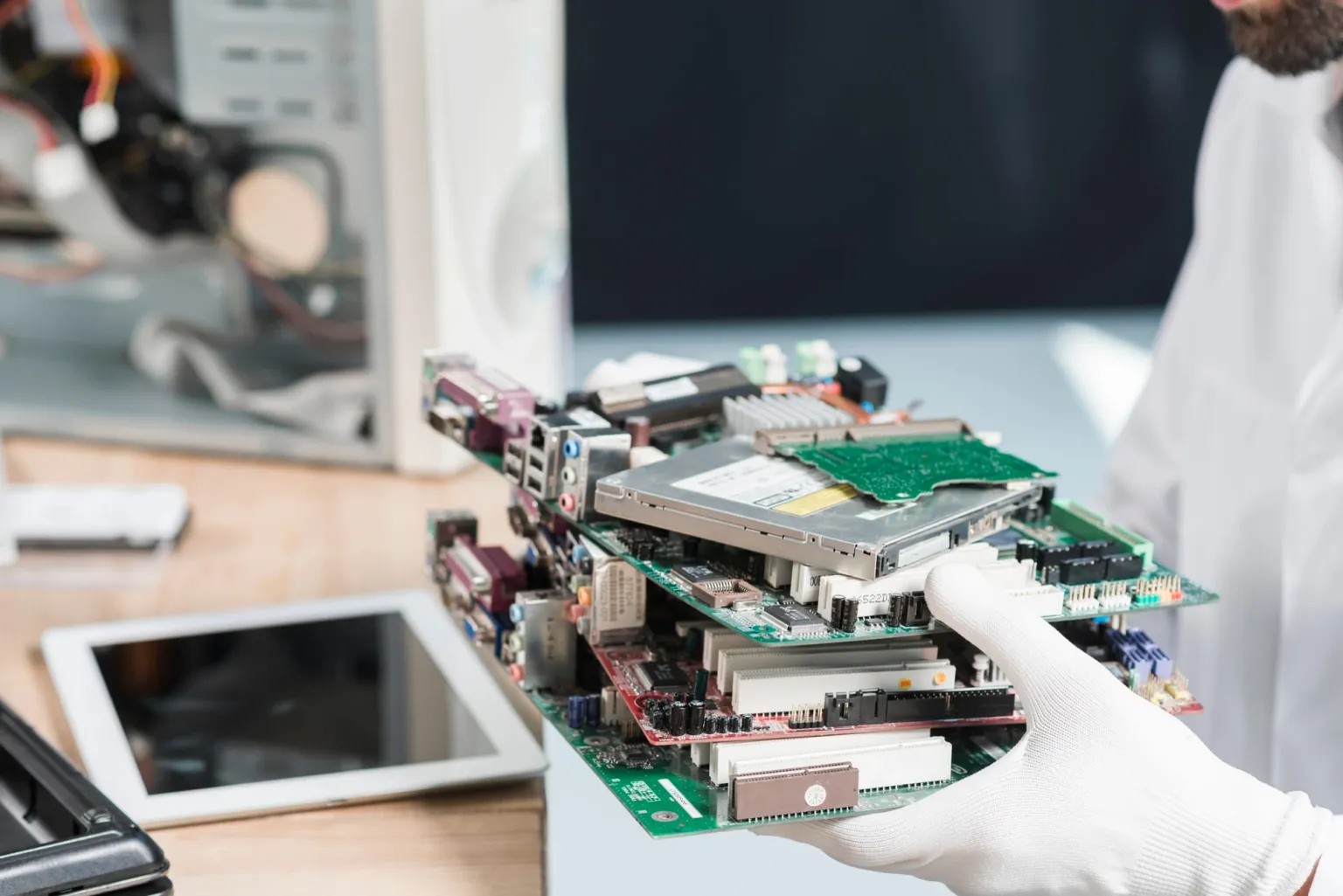
Old computers, servers, phones, printers, and monitors can contain sensitive business data and materials that may harm the environment if handled incorrectly. They may also have parts that can be reused or recycled. Throwing these devices in the trash can put your business information and the environment at risk. That is why proper e-waste disposal matters for every business.
Business e-waste includes any electronic equipment your company no longer needs, from laptops to networking devices. Responsible disposal involves securely removing data, reusing or repairing working equipment, recovering valuable materials, and handling hazardous parts safely. Simply throwing old electronics away can expose your business to data security risks and create unnecessary waste.
1. Protects Your Business Data
One of the biggest risks with old electronics is the sensitive information stored on them. Retired devices can still contain business data that may cause serious problems if it falls into the wrong hands.
Leftover Data on Retired Devices
Computers and other electronic devices may hold private information long after they are taken out of service. This can include:
- Customer records and contact details.
- Employee files and payroll data.
- Financial information and account credentials.
- Proprietary files and internal documents.
Taking a device out of service does not automatically erase its data. Hard drives can retain readable information for years unless the data is securely erased or the drive is physically destroyed.
Lower Exposure Through Secure Disposal
Protecting your business starts with handling sensitive data safely, no matter where your old equipment goes. A secure disposal process should include:
- Secure data wiping or destruction to prevent others from accessing stored information.
- Controlled handling to protect devices while they are collected and transported.
- Accurate transfer records to track equipment throughout the disposal process.
It is also important to remember that electronics recycling and data destruction are two separate tasks. Your business needs a disposal plan that covers both because not every recycler offers secure data destruction.
Although no process can eliminate every possible risk, using secure methods and keeping proper records can significantly reduce the chances of sensitive information falling into the wrong hands.
Recycling alone does not protect the data stored on your devices. Excess IT Hardware combines certified data destruction with a serialized certificate for every drive, giving your business a clear record of the work completed. Share the details of the equipment you need to retire, and the team can help manage the disposal process.
2. Meets Compliance Obligations
Getting rid of old electronics incorrectly can create legal problems for your business. The rules depend on where your company operates and the type of equipment you need to dispose of.
Two Separate Duties
Your responsibilities may vary based on your location, industry, the devices you handle, and the data they contain. Most businesses need to pay attention to two main areas:
- Environmental rules covering the disposal and recycling of electronics.
- Data-protection duties covering the security of personal and confidential information.
Keeping accurate disposal records helps show that your business handled retired equipment responsibly. Failing to follow applicable rules can lead to fines and other legal consequences. Since requirements differ across locations and industries, understanding the regulations that apply to your business is an important part of managing e-waste.
3. Prevents Toxic Harm
Old electronics can contain materials that harm the environment when they end up in landfills. Batteries and other electronic components may release hazardous substances as they break down.
Hazardous Substances Inside
Many devices contain materials that require careful handling, including heavy metals and flame retardants. When equipment is dumped, burned, or processed incorrectly, these substances can contaminate the air, soil, and water. E-waste contains several known neurotoxicants, including lead and mercury, which can enter the environment through unsafe disposal and informal recycling.
Handing your equipment to an unverified collector does not guarantee that it will be handled safely. Your business needs to consider the equipment’s final destination, not just the initial handoff.
4. Recovers Valuable Materials
Many retired electronics contain valuable materials that can be recovered and reused. Circuit boards, cables, and other components contain copper, aluminum, gold, and glass. Proper recycling keeps these materials out of landfills and reduces the need to extract new raw materials.
The metals in e-waste generated in 2022 were worth around US $91 billion, including:
- Copper: US $19 billion
- Gold: US $15 billion
- Iron: US $16 billion
These figures are reported in the Global E-waste Monitor 2024. Recovering these materials through responsible e-waste disposal helps conserve natural resources and reduce the environmental damage caused by mining, processing, and manufacturing new equipment.
5. Preserves IT Equipment Value
Old electronics are not always worthless. Equipment your business no longer needs may still be in good working condition and useful to another buyer.
Life Left in Old Gear
Instead of sending every device directly for recycling, your business may be able to reuse, refurbish, or sell some of its equipment. This extends the device’s useful life and may help recover part of its original value. The amount you can recover depends on several factors:
- The age and condition of the equipment.
- Current demand for that model.
- The cost of testing, wiping, and refurbishing.
It is important to keep expectations realistic. Selling retired equipment may help offset disposal costs, but it will not always cover the entire process or guarantee a profit. Any value recovered is an added benefit of managing electronic waste responsibly.
Some of your retired equipment may still have resale value. Excess IT Hardware tests and grades used devices to identify which ones can be resold. The company recovers value where possible and responsibly recycles the remaining equipment, helping your business make the most of its old IT assets before they reach the end of their useful life.
6. Protects Brand Reputation
A data leak or improper electronics disposal can damage a company’s reputation. How a business handles old equipment affects how customers and partners view its commitment to security and environmental responsibility.
The Cost of Getting It Wrong
News about exposed customer information or illegally dumped electronics can weaken trust in a brand. Responsible disposal helps protect that trust and shows a commitment to data security and environmental care.
Proof Over Green Claims
Proof of responsible practices matters. Disposal records and data destruction certificates provide evidence that equipment was handled properly. General claims about being environmentally friendly carry less weight without documentation to support them.
Recycling old electronics alone will not guarantee customer loyalty or improve a company’s reputation overnight. However, responsible disposal can help protect the trust a business has already built.
7. Creates Asset Accountability
You cannot protect what you do not keep track of. Old devices forgotten in storage can become a security risk. If equipment goes missing from your inventory, you may not know what data it contains or where it ended up. A proper disposal process helps prevent these problems by tracking devices throughout the process.
A Record You Can Audit
Tracking each device and keeping disposal records also helps businesses stay organized and prepare for audits. These records provide proof that old equipment was handled properly instead of leaving the company to rely on guesswork.
Important FAQs
Who is responsible for a data breach from a recycled device?
A business may still be responsible for protecting its data after a device leaves its hands. Handing old equipment to a third-party company does not automatically remove that responsibility. Certified data destruction and clear disposal records help businesses manage this risk.
What is the difference between recycling and ITAD?
E-waste recycling focuses on recovering useful materials from old electronics. IT asset disposition (ITAD) covers a wider process that can include secure data destruction, equipment resale, reuse, recycling, and records showing how each device was handled. It treats old IT equipment as a business asset rather than simply scrap.
Takeaway
Proper e-waste disposal does more than protect the environment. It helps keep business data safe, supports compliance with applicable rules, recovers value from old equipment, and protects customer trust. Each benefit matters on its own, but together they show why responsible disposal should be part of every business plan. Old electronics can still create problems after they leave your building, so handling them properly helps reduce those risks.
Retiring old computers, servers, and other IT equipment can raise many questions. Excess IT Hardware helps businesses across Florida and nationwide manage the process from start to finish. Its IT asset disposition services include certified data destruction, serialized certificates, chain-of-custody tracking, and recycling through R2-certified partners that offer zero-landfill solutions. The company also helps recover resale value from equipment that can still be used.
Visit us to discuss your equipment and find a suitable disposal solution.
Read More: What Are The Most Effective Methods Of Data Destruction