

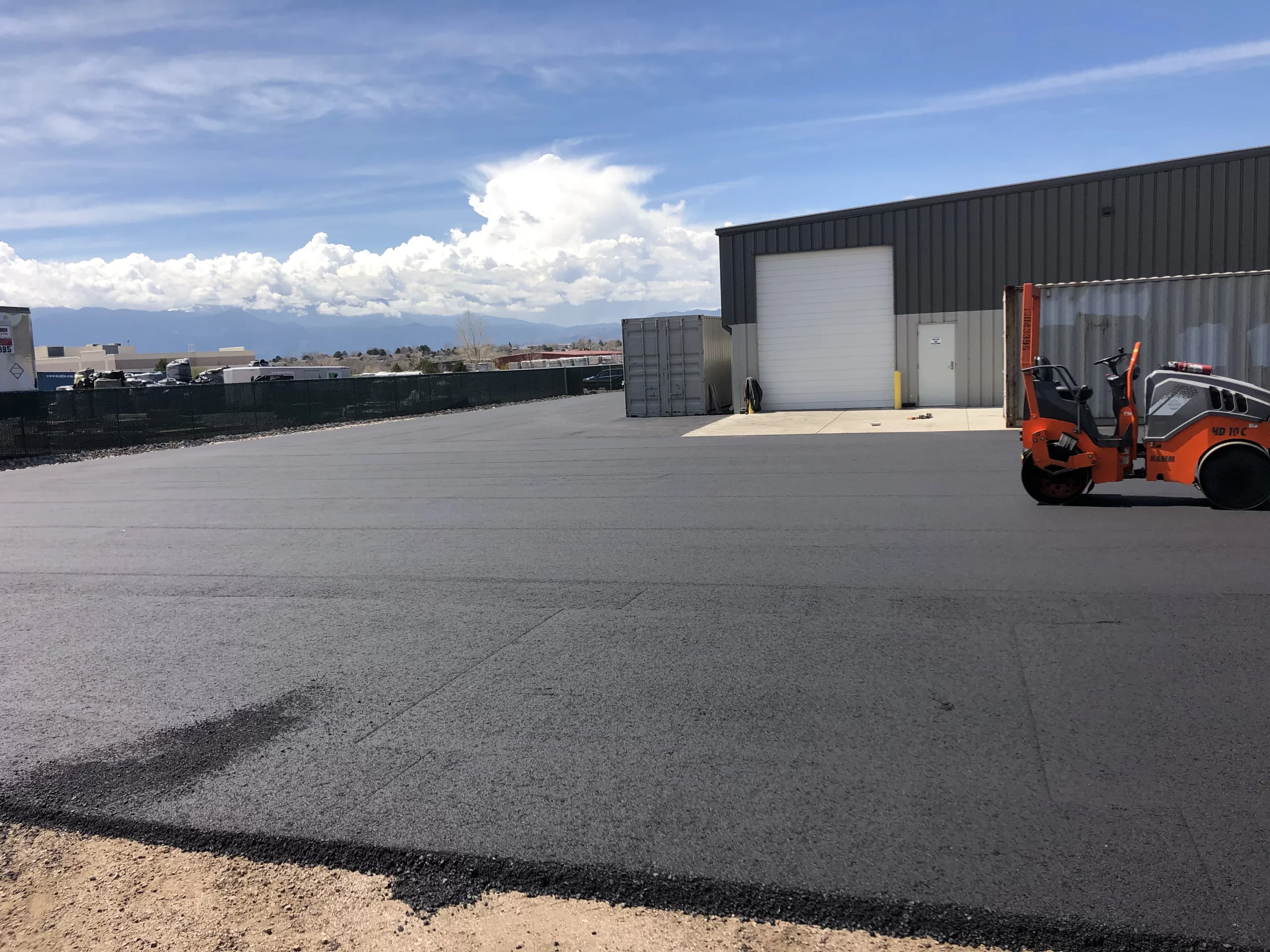
A property manager recently received three quotes for the same 10,000 square foot parking lot. The first contractor quoted $35,000, the second came in at $58,000, and the third submitted a proposal for $72,000. All three promised quality work and fair pricing, yet the gap between the lowest and highest bid seemed impossible to explain.
Commercial paving costs in 2026 follow predictable patterns. The difference between a $35,000 job and a $72,000 job usually comes down to scope, materials, site conditions, and contractor overhead. Knowing what drives these numbers makes comparing quotes straightforward and helps you recognize fair pricing when you see it.
Commercial Asphalt Paving Costs in 2026
Asphalt remains the go-to choice for commercial parking lots because it balances cost, durability, and installation speed better than most alternatives.
New asphalt paving typically runs $3.00 to $8.00 per square foot for commercial projects in 2026. The final price depends heavily on site conditions and project complexity. Asphalt overlay or resurfacing costs less at $1.50 to $3.00 per square foot since it uses the existing base. Full-depth replacement falls in the $3.50 to $6.50 range because it requires demolition, disposal, and complete rebuilding from the subbase up.
What You Can Expect by Lot Size
- Small lots (5,000 sq ft / ~15 spaces): $15,000 to $40,000 for new installation. The actual price depends on site preparation needs.
- Medium lots (10,000 sq ft / ~30 spaces): $30,000 to $80,000 depending on drainage requirements and asphalt thickness.
- Large lots (25,000+ sq ft / 75+ vehicles): $75,000 to $150,000 or higher for comprehensive projects with proper grading and quality materials.
These ranges include materials, labor, and basic site preparation. Additional services like drainage, curbing, and striping are priced separately.
What Affects Your Paving Quote
The wide pricing range exists because every commercial property presents different conditions. These factors explain why two similar-looking lots can have very different price tags.
Site Preparation
A commercial paving company cannot lay asphalt on unprepared ground. Site work often represents a significant portion of the total project cost.
Common Preparation Tasks
- Grading and excavation to create proper drainage slopes
- Subbase installation with compacted gravel or crushed stone
- Demolition and removal of existing damaged pavement
- Clearing of obstacles like tree roots and old utilities
Properties requiring extensive preparation will see higher per-square-foot costs than sites where the subbase is already stable.
Asphalt Thickness
Commercial parking lots typically need 4 to 6 inches of asphalt to handle vehicle loads. Residential driveways only need 2 to 4 inches. Each additional inch adds roughly $0.50 to $1.00 per square foot in material costs. Lots expecting heavy truck traffic may require even thicker installations.
Project Size
Larger projects benefit from economies of scale. A commercial paving company spreads mobilization costs and equipment transport across more square footage on bigger jobs. Small lots under 5,000 square feet often carry higher per-square-foot rates because fixed costs stay similar regardless of paved area.
Layout Complexity
Open rectangular lots cost less than properties with complicated layouts.
Factors That Increase Cost
- Multiple curb islands and medians
- Limited access requiring smaller equipment
- Irregular shapes needing more cuts and edge work
- Tight spaces between buildings
Concrete Services Pricing
Many commercial properties combine asphalt parking areas with concrete sidewalks, curbing, and pads where durability matters most.
Concrete sidewalks typically run $6.00 to $12.00 per square foot installed. Curb and gutter installation costs $15.00 to $30.00 per linear foot, depending on design. Concrete pad repairs fall in the $8.00 to $15.00 per square foot range. ADA ramp installations generally cost $1,000 to $2,500 each, including proper slope requirements.
Concrete costs more than asphalt per square foot but lasts longer in high-traffic pedestrian areas. It also provides the rigid surface needed for loading docks and dumpster pads.
Sealcoating Costs
Sealcoating protects asphalt from UV damage, water infiltration, and chemical spills. Industry experts recommend applying sealcoat every 2 to 4 years to maximize pavement lifespan.
Price Ranges
- Basic sealcoating: $0.15 to $0.30 per square foot for surfaces in good condition.
- With crack sealing: $0.25 to $0.50 per square foot when minor repairs are needed first.
- Complete package (sealcoating, crack sealing, striping): $0.40 to $0.90 per square foot.
Sample Project Costs
A 10,000 square foot lot costs $1,500 to $3,000 for sealcoating alone. Adding crack sealing brings the total to $2,500 to $5,000. Larger 25,000 square foot lots run $3,750 to $7,500 for basic sealcoating, or $6,250 to $12,500 with crack repair included.
Larger lots benefit from volume pricing that brings down the per-square-foot cost.
Striping and Pavement Marking Costs
Fresh striping improves safety, maximizes parking capacity, and ensures ADA compliance. Most properties need re-striping every 12 to 24 months, depending on traffic and weather.
Cost Per Marking Type
- Standard parking stall lines: $4.00 to $5.00 per line
- Handicapped stalls (complete): $25.00 to $50.00 each
- Directional arrows: $10.00 to $20.00 each
- Crosswalks: $50.00 to $100.00 each
- Fire lane marking: $1.00 to $2.00 per linear foot
- Custom stencils and logos: $15.00 to $50.00 each
Total Project Estimates
- 30-50 space lot: $300 to $700 for complete striping, including lines, handicapped spaces, and directional markings.
- 100-space lot: $800 to $1,500 for comprehensive striping.
- 200+ space lot: $1,500 to $3,000 or more, depending on layout complexity.
Most contractors include a mobilization fee of $150 to $350 for equipment transport and setup.
Preventative Maintenance Saves Money Long-Term
Proactive maintenance costs 3 to 5 times less than reactive repairs, according to industry data. Property managers who budget for regular upkeep avoid expensive emergency replacements.
Recommended Schedule
Annual Tasks
- Crack sealing to prevent water penetration
- Professional inspection to catch small problems early
Every 1-2 Years
- Striping refresh for visibility and ADA compliance
Every 2-4 Years
- Sealcoating for UV and chemical protection
Budgeting Guidelines
Industry experts recommend allocating $0.10 to $0.25 per square foot annually for routine maintenance. For a 25,000 square foot lot, this means $2,500 to $6,250 per year in planned expenses. That is far less than the $75,000+ cost of premature replacement.
Property managers with rental income should budget 3% to 5% of gross rental income toward pavement maintenance and capital improvements.
How to Evaluate Quotes
Not all quotes represent equal value. Knowing what to look for helps you compare proposals fairly.
What Quality Quotes Include
A detailed scope of work should specify exactly what is included. Material specifications should list asphalt type, thickness, and grade. Site preparation details should explain grading and base work. The timeline should include realistic start and completion dates. Warranty information should cover both workmanship and materials. Payment schedules should tie to project milestones.
Red Flags
- Vague descriptions that leave room for surprise costs
- Unusually low prices suggest thinner asphalt or skipped prep work
- Pressure tactics demanding immediate signatures
- No site inspection before providing an estimate
- Missing documentation for license and insurance
FAQs
How long does commercial asphalt paving last?
Well-installed commercial asphalt typically lasts 15 to 20 years with proper maintenance. Poorly maintained lots may fail in under a decade. Regular sealcoating and crack repair can extend pavement life by 3 to 5 additional years.
When is the best time of year for paving projects?
Late spring through early fall provides ideal conditions. Warm temperatures help the material cure properly. Most contractors avoid the winter months and rainy seasons.
Final Thoughts
Knowing what you should pay a commercial paving company in 2026 helps you set realistic budgets and compare quotes fairly. Request quotes from multiple contractors and compare the scope and specifications carefully. Choose the partner who delivers transparent pricing and clear communication. Your pavement is the first thing visitors see when they arrive, and it deserves to be a place of pride.
For property managers across North Carolina’s Triangle region, Satterfield Paving delivers transparent pricing and quality craftsmanship that commercial properties deserve. Their team handles asphalt paving, sealcoating, striping, concrete work, and preventative maintenance programs. Licensed, insured, and backed by decades of experience, they treat every project like their reputation depends on it.
Your pavement is the first thing visitors notice when they arrive, and it should reflect pride in your property.