

A Long Island parking lot may need paving when cracks, potholes, drainage problems or uneven pavement become widespread. Small surface damage can often be repaired. More serious deterioration may call for resurfacing or new pavement. Traffic, weather and the age of the lot also affect the decision. Property owners should assess how much of the surface is damaged rather than waiting for a single large problem. This one’s about spotting the warning signs before parking lot paving Long Island becomes an emergency instead of a plan.
Key Takeaways
- Look at the overall pavement condition. Widespread cracks and repeated potholes may mean basic repairs are no longer enough.
- Check for uneven areas. Sunken pavement can point to problems beneath the surface that simple patching will not fix.
- Pay attention to drainage. Standing water can weaken asphalt and speed up pavement deterioration.
- Consider the age of the parking lot. Older pavement may need more extensive work as repairs become more frequent.
- Compare repair and paving needs. When damaged areas keep returning, a paving project may be a better long-term option.
What Are the Signs a Parking Lot Needs Paving?
Most lots give plenty of warning before they actually fail. Spot these early and you keep more options on the table, along with a smaller bill.
Widespread Cracking
Cracks scattered across large areas can indicate deeper pavement or base problems. Sealing each new one won’t do much when three more show up next to it. Entrances and turning areas tend to show this first, since vehicles put more stress there. When cracking becomes widespread, paving may be more practical than repeated patching.
Deep Potholes
A pothole deeper than two inches means water’s been sitting under that spot for a while now. Vehicles driving over it just make things worse, and fast. Cold patch holds for a bit, but it rarely survives another winter intact. Several deep ones scattered around the lot at the same time usually mean the whole surface is due for replacement.
Uneven or Sunken Areas
Sunken pavement means the ground below has shifted, eroded, or compacted unevenly, and that’s not something asphalt on top fixes. Cars bottom out driving over these dips, and rainwater just pools there every time. Multiple low spots may indicate drainage or base problems that require more extensive pavement work.
Crumbling Pavement Edges
Edges near curbs and landscaping wear out first, they just don’t get the same support underneath as the rest of the lot. Runoff collects along these spots and slowly works its way into the pavement. Left unchecked, that damage keeps creeping inward. Once edge damage shows up across the whole lot, it’s usually one of the clearest signs paving is overdue.
Drainage Problems
Water pooling after every single rain means something under the surface isn’t doing its job. Bad drainage speeds up cracking, potholes, everything. A lot with water problems in several spots, not just one dip near the entrance, need more than a patch. Regrading alongside the new paving job usually fixes this for good, instead of chasing puddles around every season.
When Can a Parking Lot Be Repaired Instead of Repaved?
Not every beat-up lot needs a full repave. If the damage stays limited to a few areas and the base is still solid, sealing and patching can add years to what you’ve got. Lots with isolated damage and a stable underlying base may be good candidates for repairs. What decides it is how much of the surface is actually damaged, and whether the same spots keep failing after you’ve already fixed them once.
How Does Long Island Weather Affect Parking Lot Pavement?
The local climate puts real stress on asphalt all year round. Here’s how each season chips away at it.
Freeze-Thaw Cycles
Water seeps into small cracks, freezes, expands, then thaws a few days later and refreezes. Every cycle pushes that crack open a little more. Repeated freezing and thawing can gradually widen cracks and contribute to pavement deterioration. A few winters of that, and small cracks you ignored turn into structural damage.
Snow and Ice
Plows and de-icing salt both wear pavement down over a season. Blades chip at edges, especially near curbs and drain covers. De-icing materials and repeated freeze-thaw cycles can contribute to pavement deterioration. Lots plowed heavily every winter age noticeably faster than ones in lighter snow areas.
Rain and Moisture
Long Island gets a lot of rain across the year, and standing water is asphalt’s worst enemy. That moisture eventually finds its way into cracks and joints. Once it reaches the base, the entire support structure beneath it weakens. Lots with poor drainage age faster than well-drained ones right next door.
Summer Heat
Heat softens asphalt slightly during the hottest stretches of the year. Heavy vehicles parked in one spot for hours can leave lasting impressions in that softened surface. UV rays also dry out the binder over time, making it brittle again when cold weather returns. That constant swing between soft summers and hard winters wears pavement down quicker than a steady climate ever would.
How Long Does a Paved Parking Lot Last?
A properly installed lot usually lasts 15 to 25 years with regular upkeep. Traffic, weather, and how well the base was built all factor into where you land in that range. A retail lot with heavy truck traffic wears out quicker than a quiet office lot down the street. Lots that stay on top of sealcoating and crack sealing tend to land closer to that upper number.
What Happens If You Delay Parking Lot Paving?
Delaying necessary repairs can lead to more extensive and costly pavement work over time. Small cracks become potholes, potholes eat away at the base, and base failure requires full replacement rather than a simple overlay. Liability risk climbs too; the longer damage sits, the more likely someone trips or a vehicle gets damaged. Tenants and customers notice a rough lot, and that shapes how they see the whole property. Handling it while the damage is still manageable almost always beats waiting for things to get worse.
How Is Parking Lot Paving Done?
There’s a set process here, and skipping steps is usually why lots fail early.
Inspect and Prepare the Existing Pavement
The first thing they do is look at the current surface and flag anything that needs extra attention. That’s also when drainage problems are found before they are covered by new asphalt. If you skip a good inspection, the problems will probably come back in a year or two.
Remove the Damaged Surface
Old asphalt is ripped out to the base, sometimes even further if that base is compromised as well. Paving over a compromised surface without addressing the underlying problem can lead to premature failure. Proper removal creates a suitable surface for the new pavement.
Prepare the Base
Before any new asphalt goes in, the base is graded, compacted and repaired. One of the biggest reasons new pavement fails early is a weak or uneven base. Good grading here also aids water flow, rather than pooling on the new surface later.
Install the New Asphalt
The fresh asphalt is spread out in even layers over the prepared base. The thickness is determined by the traffic expected. Heavier-use areas need more depth than standard parking spots. Getting this part right determines how well the pavement will stand up to everyday use.
Compact and Finish the Surface
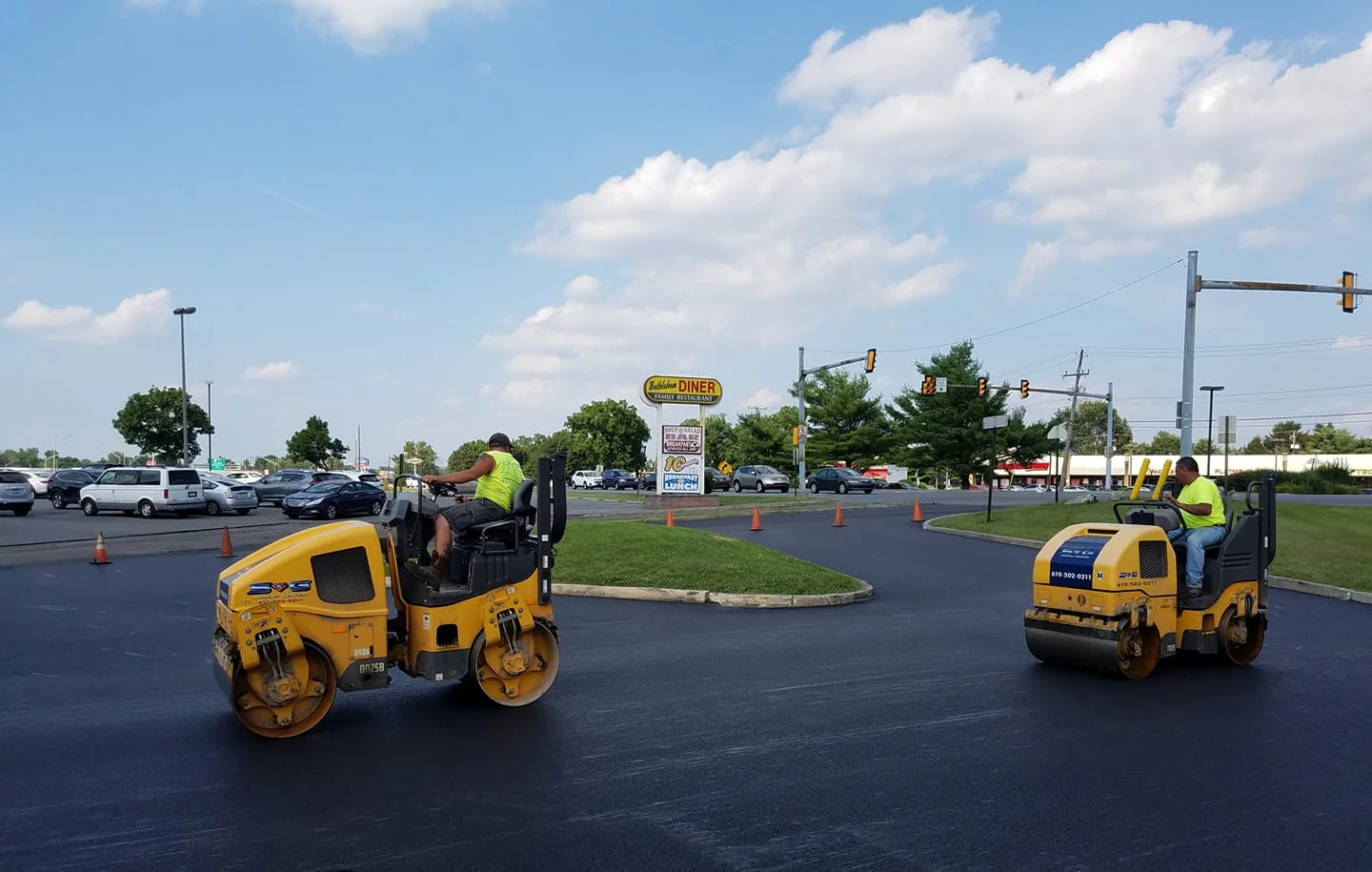
Heavy rollers compact the asphalt while it’s still warm, locking everything together for strength. Proper compaction is the difference between a pavement that will last for years and one that cracks early. Once it’s compacted and cooled, the lot usually needs a short curing period before full traffic returns.
How Can Property Owners Extend the Life of a Newly Paved Parking Lot?
A few simple habits stretch new pavement well past its average lifespan.
Sealcoat the Asphalt
Sealcoating protects new asphalt from the sun, oil, and water in those first couple of years. Contractors typically recommend applying the first coat within 6 to 12 months of installation. Then reseal every two to three years to maintain the protection.
Seal Cracks Early
Even brand new pavement cracks a little after its first winter. Sealing those quickly keeps water from reaching the base underneath. Sealing cracks early can help limit moisture intrusion and slow pavement deterioration.
Maintain Proper Drainage
Keeping drains and catch basins clear stops water from pooling on the new surface. Fix low spots early, before water gets in the habit of collecting there, and you protect the investment you just made. Lots with solid drainage from day one tend to outlast similar lots without it by several years.
Conclusion
A parking lot warns you long before it actually fails, spreading cracks, deep potholes, sunken sections that patching can’t touch anymore. Long Island weather speeds all of that up, so catching these signs early matters more here than almost anywhere else. Acting on them sooner, instead of waiting for a full breakdown, keeps costs down and protects what your property’s actually worth. That’s the real decision behind parking lot paving Long Island owners eventually have to make.